Samsung Galaxy A57 Review

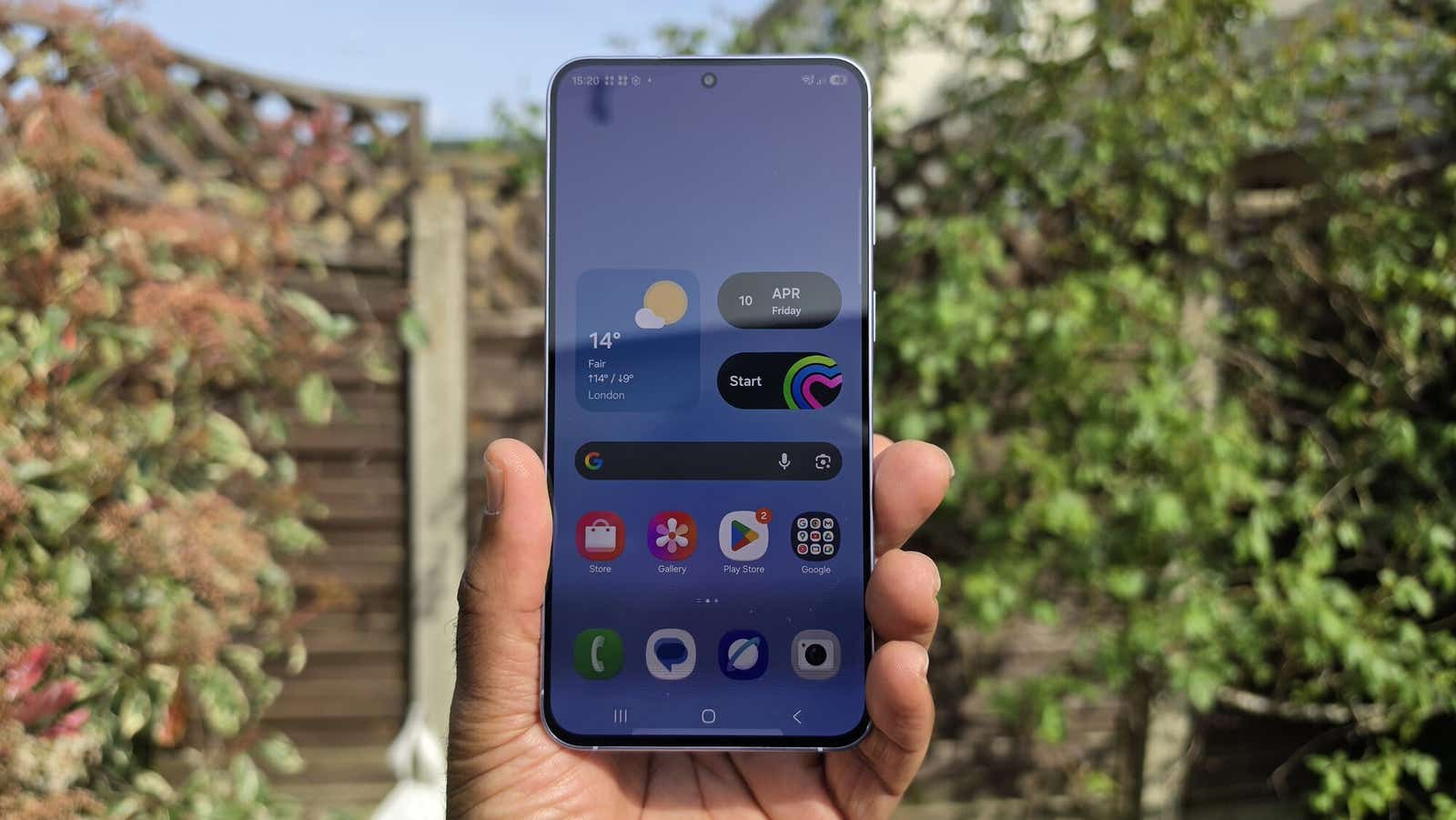
Samsung Galaxy A57 pros and cons
Slender 6.9mm profile paired with premium aluminium frame.
Reliable 50MP main camera, strong low-light capability.
Pledge of six years for Android OS and security updates.
The 5MP macro camera drives mixed results.
Lacks wireless charging.
Major Exynos improvements, remains scope for improved performance.
The Samsung Galaxy A57 enters the 2026 market as a carefully polished successor within the highly lucrative mid-range segment.
While premium flagships often dominate the headlines, recent market data confirms the affordable A-series remains Samsung's serious volume driver.
As the current economic climate pushes more consumers to seek value without sacrificing premium features, this device aims to perfectly thread that needle.
Evolving significantly from last year's effort, the Galaxy A57 brings a notably slimmer chassis and robust software support to the table, blending elegant design with everyday practicality.
As the modern market pivots towards thinner hardware, does this handset have the credentials to sustain Samsung's global momentum?
Read our full Samsung Galaxy A57 5G review to find out.

Design and specifications
The Galaxy A57 naturally presents a build quality that challenges its mid-range positioning. The phone adopts a significantly thinner design profile than last year's model, trimming down from the A56's 7.4mm to a remarkable 6.9mm, as well as shaving off a bit of heft, weighing a mere 179g.
Slipping a device this slim into a pocket does make it refreshingly unobtrusive, especially when compared to the increasingly bulky camera modules found on top-tier alternatives.
Samsung has evolved the rear aesthetic as well by refining, rather than drastically altering, the A-series' iconic silhouette.
The Galaxy A57 keeps the brand's signature vertical floating camera layout at the top-left, with each of the three individual lenses now encircled by an elevated, semi-translucent ring that beautifully catches the light and contrasts the glossy glass rear.
Available in four distinct colourways: Awesome Navy, Awesome Grey, Awesome Icyblue, and Awesome Lilac, we took a look at the lattermost, and it did draw some positive attention from its subtle pastel shades.
That being said, it does tend to attract fingerprints much faster than frosted-rear alternatives, but returns to its sheen with a quick wipe of its Gorilla Glass Victus+ protected behind.
It's a similar story for the front panel, where the display also packs an optical ultrasonic sensor for fingerprint-based security, as well as leveraging the front-facing camera all feeding in to Samsung's Knox software to maintain maximum privacy for contacts and content alike.
Durability remains a strong point for the A-series, and this year's effort has been bumped up to an official IP68 rating for top-tier water and dust resistance.
The sturdiness continues with the flat aluminium frame surrounding the device, complete with an ergonomic kink that raises the volume and power buttons slightly outward from the right edge, making them incredibly easy to find by touch alone, while keeping a distinctive visual flair to the Galaxy A57.

Display and audio quality
A 6.7-inch Super AMOLED+ display anchors the visual experience, as well as marks another upgrade with Samsung's smartphone sequel.
This technological step up has allowed Samsung to achieve the ultra-thin 6.9mm chassis while simultaneously trimming the bezels to deliver an improved screen-to-body ratio of 88.8%, a nice development where every pixel counts.
Still rocking a 1080p / Full HD+ resolution, the screen offers crisp text, vivid colours, and deep contrast, complemented by Samsung's impressive operating system slathered over the latest version of Android.

The flat display supports a silky 120Hz refresh rate, ensuring app navigation and scrolling remain incredibly smooth.
Viewing angles are exceptionally wide, guaranteeing that sharing a video with a friend does not result in washed-out colours or diminished contrast.
Outdoor visibility is decent, as the display reaches a peak brightness of 1900 nits and natively integrates Samsung's Vision Booster technology, a combination that maintains legibility and colour accuracy even in direct sunlight.
The Galaxy A57 is also fully supported by HDR10+ certification for pin-sharp (depending on your internet) media playback, whilst audio quality matches the energy of the visuals courtesy of a pair of stereo speakers equipped with Dolby Atmos technology.
A bit lossy on the high end with distortion on the bass, but between Samsung's 'Voice Focus' mode (which isolates you against background chatter on calls and VoIP apps) and a clear speaker, it's a fairly competent setup here.
The overall audio experience doesn't compare to popping in a pair of headphones, but as is the case with the vast majority of smartphones, the absence of a dedicated 3.5mm headphone jack means wireless is the only way to go.

Camera performance
The A57's camera layout features a triple-camera system, central to which is a 50-megapixel main sensor. Equipped with an f/1.8 aperture and Optical Image Stabilisation (OIS), daytime photos provide sharp details, punchy colours, and wide dynamic range.
When comparing the Galaxy A57 to the competition, the most immediate gap to note is the absence of a dedicated optical telephoto lens, meaning little by way of dedicated optical magnification.
Instead, it relies on a high-quality 2x digital crop directly from the 50MP sensor, with the camera app allowing you to push the digital zoom to a strict upper limit of 10x.
Images taken at this 10x maximum exhibit some degradation, producing soft results.
Where the main sensor truly earns its stripes is in low-light photography, with Samsung integrating its proprietary Nightography system heavily into this generation. This means a main lens features larger 1.0µm pixels to absorb significantly more ambient light than previous iterations, as well as an enhanced Image Signal Processor that aggressively processes data to reduce noise and blur in darker environments.
The OIS works tirelessly to reduce the natural jitters when holding a device, and pairing that with longer shutter lengths enables the A57 to produce bright, accurate shots after dark without depending on the potential harshness of flash photography, although one is present.


The secondary camera is a 12-megapixel ultra-wide lens with a 123-degree field of view, stepping up to deliver expansive capture opportunities with minimal edge distortion and a maintained level of crispness and clarity.
Rounding out the trio is a 5-megapixel macro sensor, which is serviceable, but did produce slightly softer images than one might like from a mode specifically geared towards grabbing those close-up details just right.
Video capture is reliable from the Galaxy A57, offering 4K recording on both the front and rear cameras to ensure high-resolution moving memories for all occasions.
However, it is worth noting that Samsung's latest still tops out at a maximum of 30fps, despite an upgrade to its internal processor.


On the front, the 12-megapixel camera natively supports Super HDR, ensuring selfie videos are vibrant, with colour and contrast carefully calibrated on the fly in an effort to keep backgrounds sharp and well-lit.
The camera app is further tweaked by AI Segmentation, which automatically identifies and refines different elements like skin, hair, and backgrounds, ensuring crisp content all round.
So a decent shout from the A57's camera setup, albeit perhaps not the leap one might like, or expect, from an annual upgrade.
Hardware this time around is largely identical to the A56 when it comes to raw camera specs (a somewhat common Samsung trait by all accounts), relying on the A57's refined internal architecture and Galaxy AI smarts to bring the best out of your photos.
Performance and software
The new Exynos 1680 is built on Samsung's current, and efficient, 4nm process, handling daily navigation, media consumption, and general multitasking with confidence and fluidity.
Navigating between multiple active applications feels snappy, and the generous screen real estate makes split-screen multitasking a genuinely viable option for productivity on the go.
This octa-core chip, paired with either 8GB or 12GB of RAM, manages heavy web browsing and media streaming over Wi-Fi networks (up to 6E is now supported, another welcome upgrade) effortlessly, whilst Bluetooth compatibility is up to 6.0.
However, the hardware does make real concessions to achieve the mid-range price point, and lacks some of the raw computational horsepower and advanced neural processing of a flagship Snapdragon 8-series processor.
Heavy mobile gamers may still experience minor thermal throttling and dropped frame rates during intensely graphical sessions (there was a bit of lag when getting into the thick of a city skirmish on Ubisoft's The Division: Resurgence), but the A57's exceptionally thin chassis slightly offsets the benefits of a significantly larger internal vapour chamber, meaning the phone can run warm under sustained pressure.
Connectivity is modernised with NFC for contactless payments and dual SIM capabilities, including eSIM support.
The device runs on Android 16, integrated seamlessly with Samsung's One UI 8.5 interface, meaning the best of both Google's Circle to Search and its own software flourishes are all present and correct in a single device.
Crucially, Samsung has maintained its industry-leading software pledge over last year's model, officially committing to provide up to six major Android OS upgrades and six years of security patches. This ensures the Galaxy A57 will safely look after your daily digital life, and bank balance, far beyond the typical mid-range upgrade cycle.

Battery and charging
Samsung has included a 5,000mAh battery within the slim chassis (as with the A56), working steadily through a full day of heavy use.
Light users might be able to stretch that to a day and a half with judicious use, but a common work day of talking and texting, bookended by a quiet commute of watching music videos and movies saw it down to around 40%.
Samsung also includes a suite of fairly robust power-saving modes on the software side, ensuring that those final few battery percentages can be stretched out during emergencies.
The handset does support 45W Super Fast Charging 2.0, meaning a 60% charge in around 30 minutes, taking the phone from flat to full in just over an hour. Do note that the required high-speed power adapter required to achieve these speeds is sold separately, as one might expect.
Furthermore, the Samsung Galaxy A57 does continue the A-series' lineage of lacking any wireless charging capabilities, keeping it firmly rooted in the mid-range tier.
Compare mobile phone deals
Check out the latest Samsung Galaxy deals on Uswitch
Samsung Galaxy A57 5G UK pricing and availability
The Samsung Galaxy A57 5G officially launched in the UK on April 10, 2026. The pricing structure remains highly competitive within the crowded mid-range market, with 8GB RAM and 256GB storage available for £529, and the 12GB RAM / 512GB storage effort for £699.
So a compelling introductory price - although a meaningful increase of £30 on the entry model - but quite the leap of £170 to double RAM and storage.
This reflects the global market for obvious reasons given the costs of chips skyrocketing in the recent past, but £699 takes the A57's price into striking distance of impressive devices like Motorola's Edge 70, which lend a distinctly flagship experience for just £100 more.

Final verdict
All in all, the Samsung Galaxy A57 demonstrates exactly why this lineage continues to dominate global sales charts, proving that mid-range devices can deliver excellent hardware alongside remarkable software longevity.
It offers a gorgeous Super AMOLED+ display, dependable battery life, and a highly capable main camera, all wrapped in a premium, ultra-slim design that makes a noticeable leap over the A56.
The secondary macro lens, lack of wireless charging, and sub-Snapdragon daily experience in terms of battery management and horsepower are also minor, yet calculated, compromises.
However, if you want a stylish, reliable smartphone backed by an unbeatable six years of software updates, the Samsung Galaxy A57 remains a secure investment, especially at its introductory near-£500 price point.
