Vehicle-to-grid (V2G) charging explained

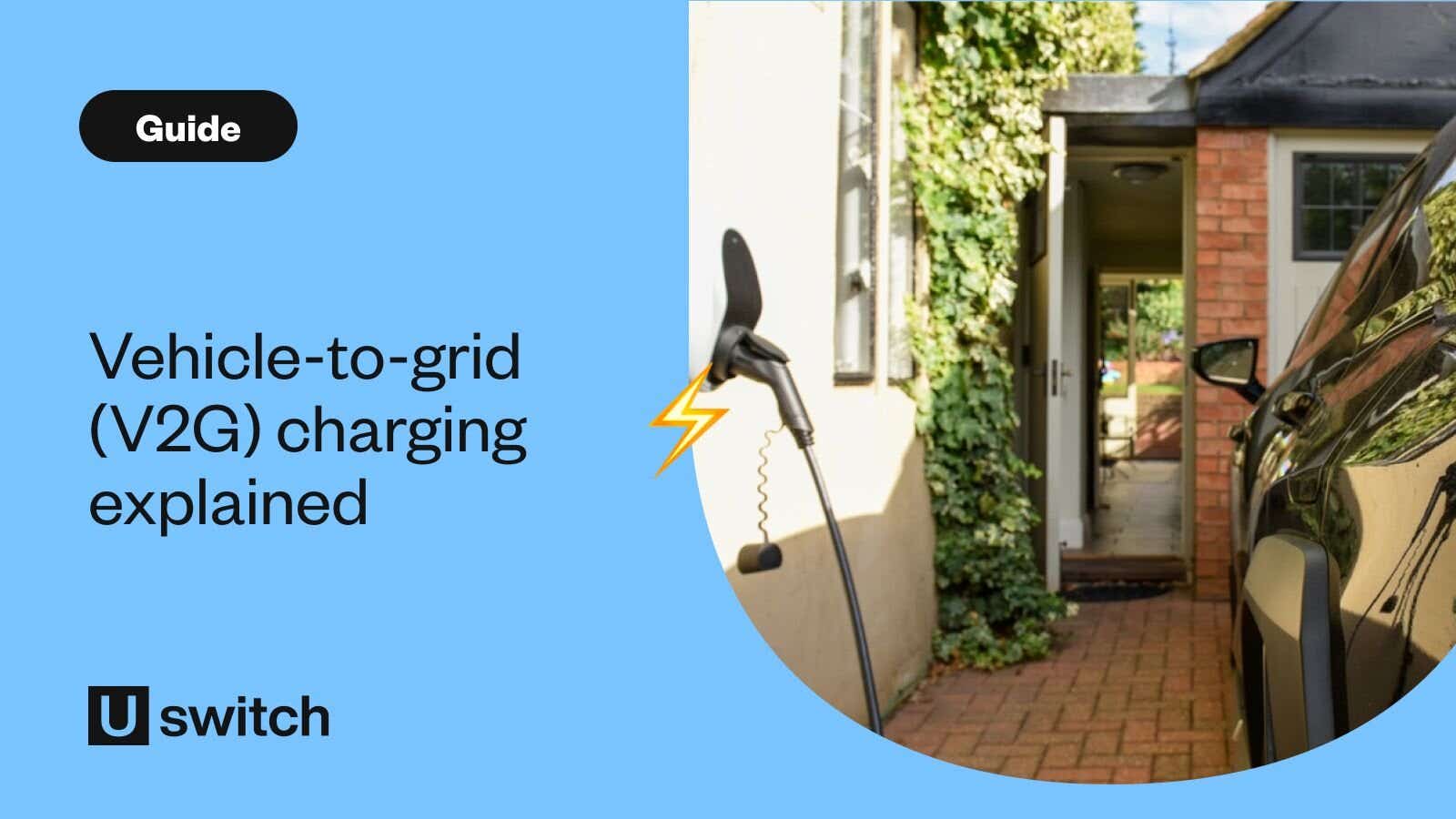
What is V2G charging and how does it work?
Vehicle-to-grid (V2G) is a form of two-way charging that lets compatible electric vehicles (EVs) send electricity stored in their batteries back to the National Grid in addition to drawing power from it. This can help balance electricity supply and demand across the grid. The process relies on a V2G-compatible charger and a vehicle with the right hardware.
A similar technology is Vehicle-to-home (V2H), which works the same way but draws electricity from your car to power your home directly as a form of backup power.
Some energy suppliers offer apps to do this or integrate with existing home energy systems to monitor and manage your energy use. These systems ensure your EV charges when energy is cheap and feeds energy back when it’s needed, benefiting both you and the grid.
What are the benefits of V2G charging?
V2G charging offers several key benefits:
- Financial - it lets you earn money or reduce your energy bills by selling excess power back to the grid
- Environmental - it helps stabilise the grid - especially during periods when renewable energy sources are less reliable - and reduces overall carbon emissions
- Practical - it turns your EV into a power source for your home, providing an introduction to vehicle-to-home (V2H) charging, which is similar to V2G but focuses on supplying power to your home instead of the grid.
V2G and time-of-use tariffs: a perfect match
Time-of-use (TOU) tariffs charge less for electricity during off-peak hours. This makes it cheaper to charge your EV when demand is low. With V2G, you can also sell electricity back to the grid during peak times, when rates are higher.
Smart charging strategies like charging during off-peak times, selling power back during peak hours, or setting specific charge/discharge times help you access the lowest rates and boost the potential profit of V2G charging.
Is V2G available in the UK?
Yes, although vehicle-to-grid (V2G) charging is still in its early stages in the UK. Octopus Energy, for example, offers a dedicated V2G tariff called Power Pack, which allows eligible customers to charge their EVs for free in return for letting Octopus manage when electricity is returned to the grid.
However, compatibility is currently limited to certain vehicle and charger combinations. You'll also need a suitable smart meter and electricity tariff. Other companies, including OVO Energy and Indra Renewable Technologies, have run V2G trials, with further developments underway.
Which cars and chargers support V2G?
The Nissan Leaf was one of the first electric cars to support vehicle-to-grid (V2G) charging, using the CHAdeMO connector. However, newer V2G systems increasingly use the more common CCS connector, and manufacturers such as Volkswagen have developed bidirectional charging capabilities.
In the UK, compatible combinations remain limited. For example, Octopus Energy's Power Pack scheme currently supports just one combination: a specially V2G-enabled BYD Dolphin EV paired with a V2G-compatible Zaptec Pro charger.
Other bidirectional chargers include the Wallbox Quasar 2, although support depends on the vehicle and availability of compatible UK services. V2G equipment can cost considerably more than conventional home chargers, and installation may require electrical upgrades and approval from your local electricity network operator.
What are the downsides of V2G?
Despite its potential benefits, vehicle-to-grid (V2G) charging has several drawbacks to consider:
- Battery degradation: Regular charging and discharging can increase battery wear, potentially shortening its lifespan. However, research suggests the additional degradation may be relatively small when V2G charging is carefully managed.
- High upfront costs: Bidirectional chargers are generally more expensive than conventional home chargers, and installation may require additional electrical work that adds to the cost of installation. With few commercially available systems, exact prices are hard to establish but will run into the thousands of pounds.
- Limited availability: V2G remains a niche technology in the UK, requiring a compatible vehicle, bidirectional charger, smart meter and suitable energy tariff. You may also need approval from your local electricity network operator before exporting power to the grid.
How much money could you make?
The financial benefits of vehicle-to-grid (V2G) charging depend on your supplier's scheme, how much electricity your car uses and when it's available to return power to the grid. Rather than receiving direct payments for exported electricity, you may benefit from cheaper or even free EV charging.
For example, Octopus Energy's Power Pack tariff offers free eligible home charging in exchange for allowing Octopus to manage when your car charges and discharges. The company estimates that drivers using its Power Pack Bundle could save up to £620 a year compared with charging on its standard variable electricity tariff and around £161 a year compared to using its Intelligent Octopus Go EV tariff.
Other V2G arrangements may reward drivers for exporting electricity during periods of high demand. However, potential earnings must be weighed against charging costs, battery wear and the expense of compatible equipment.
How do I get started with V2G?
To use vehicle-to-grid (V2G) charging, you'll need:
- A compatible electric vehicle (EV).
- A bidirectional V2G charger.
- A compatible smart meter.
- An energy supplier offering a suitable V2G tariff.
- Permission from your local electricity network operator to export electricity, where required.
Costs are another consideration. A conventional home EV charger typically costs around £800–£1,200 including installation, according to the Energy Saving Trust. However, V2G equipment is considerably more expensive, and installation may require network approval and additional electrical work, which can add hundreds or even thousands more to the bill.
Availability also remains limited. Octopus Energy's Power Pack is currently the only UK tariff, but it supports only specific vehicle and charger combinations.
FAQs
Can I use my EV to power my house in the UK?
Yes, it is possible to use an EV to power your home in the UK, provided the EV and your home charging setup are compatible with bidirectional charging. Known as vehicle-to-home (V2H), it can provide backup power from your EV to your home during power outages and support off-grid setups. However, V2H is currently limited to certain EV models and compatible chargers.
What is the difference between V2G and V2H?
V2G sends energy from your EV back to the grid, while V2H powers your home directly. V2G requires specific grid infrastructure, while V2H typically serves as backup power. Availability in the UK depends on compatible EVs, chargers and energy suppliers.
What is the Octopus V2G tariff?
The Octopus Power Pack enables EVs to charge during off-peak hours and discharge excess energy back to the grid when demand is high. This process helps balance the grid and allows EV owners to earn money. You can apply through the Octopus Energy website.
Will V2G damage my EV battery?
Early research shows that V2G can impact battery life, though proper usage within recommended guidelines should prevent significant wear. Minimise damage by avoiding frequent battery drain and optimising your vehicle’s battery management system for V2G. Regular monitoring can also help protect the battery.
Is V2G charging worth it?
V2G charging can be worth it if the income from selling electricity back to the grid outweighs setup costs, which can run into many thousands of pounds. Ideal users will already have compatible EVs, a suitable charging system and access to TOU tariffs that let them maximise off-peak charging.
Do I need a smart meter for V2G?
Yes, a smart meter is essential for V2G as it provides real-time data on energy usage and enables precise control of when to charge and discharge. The smart meter should also be compatible with V2G systems, such as those provided by suppliers like Octopus Energy.
Can V2G help the environment?
Yes, V2G helps the environment by balancing the grid and supporting renewable energy sources. By storing excess renewable energy and discharging it during peak demand, V2G reduces reliance on fossil fuels, helping lower carbon emissions and improve overall energy efficiency.
How do I sign up for a V2G trial?
UK vehicle-to-grid (V2G) trials have been limited, with earlier schemes such as Electric Nation and Octopus Powerloop now closed. To find new opportunities, check announcements from energy suppliers, EV manufacturers and charging companies.
Alternatively, Octopus Energy offers a commercial V2G tariff called Power Pack, with an online registration process for eligible customers. However, you'll need a compatible vehicle and charger, a suitable smart meter and permission to export electricity to the grid. Availability remains limited.
